How Bantam's car became the Army's jeep
The American Bantam Car Company of Butler, Pennsylvania, built the first jeep for the U.S. Army in the summer of 1940, working to requirements drawn up with Army officers in its own plant.
The Army then let Bantam's larger competitors, Willys-Overland and Ford, study Bantam's car and build their own, bought 1,500 from each of the three makers, and standardized on Willys's version. Willys and Ford built about 640,000 of them during the war. Bantam built 2,642 and was given no more orders for the vehicle.
This page follows the record: Army reports and contracts, the 1941 Senate hearings, the Federal Trade Commission's 1948 decision and the Army's official histories. Where the participants' accounts disagree, it says so.
1933–1939
The Army's search for a light car
For most of the 1930s the Infantry and the Quartermaster Corps looked for a light cross-country vehicle to replace the motorcycle and sidecar. The Army tested an American Austin, a Butler-built midget car, in 1933, and Captain Robert G. Howie built a low machine-gun carrier from Austin parts at Fort Benning in 1937.
American Austin was reorganized as the American Bantam Car Company in the mid-1930s. The Quartermaster Corps tested three Bantam chassis in 1938 and the Cavalry Board found them unsuitable: too little power, too little cross-country ability. Bantam kept writing to the Army, offering its redesigned car for further tests.
June 1940
The requirement, drawn up at Butler
In the spring of 1940 Bantam's Washington representative, Charles H. Payne, took the idea back to the Office of the Chief of Infantry. On 6 June the Chief of Infantry asked for a four-wheel-drive vehicle no more than 36 inches high.
On 19 June an Ordnance Technical Committee subcommittee, with Major Howie, met Bantam's officials and engineers at the Butler plant. The FTC later found that the conferees "used the Bantam car as a basis from which to work". The subcommittee's report of 22 June set the first characteristics and recommended buying 70 cars.
- No more than 1,200 lb
- Wheelbase about 75 in
- 36 in high
- Four-wheel drive
- Crew of three and a machine gun
July 1940
Only Bantam and Willys bid
On 11 July 1940 the Quartermaster Corps sent an invitation to bid for 70 cars to about 135 manufacturers, with general specifications and an outline drawing. The bidders had to work out the design themselves. The first car was due in 49 days.
Only Bantam and Willys-Overland bid. Willys was cheaper but would not promise the delivery time, so on 25 July the contract went to Bantam.
July–September 1940
Forty-nine days at Butler
Bantam engaged Karl Probst, a Detroit engineer, to draw the layout for its bid. Plant manager Harold Crist and the mechanics Ralph Turner and Chester Hempfling built the first car by hand, largely from bought-in parts: a Continental engine, a Warner Gear transmission, and Spicer axles and transfer case.
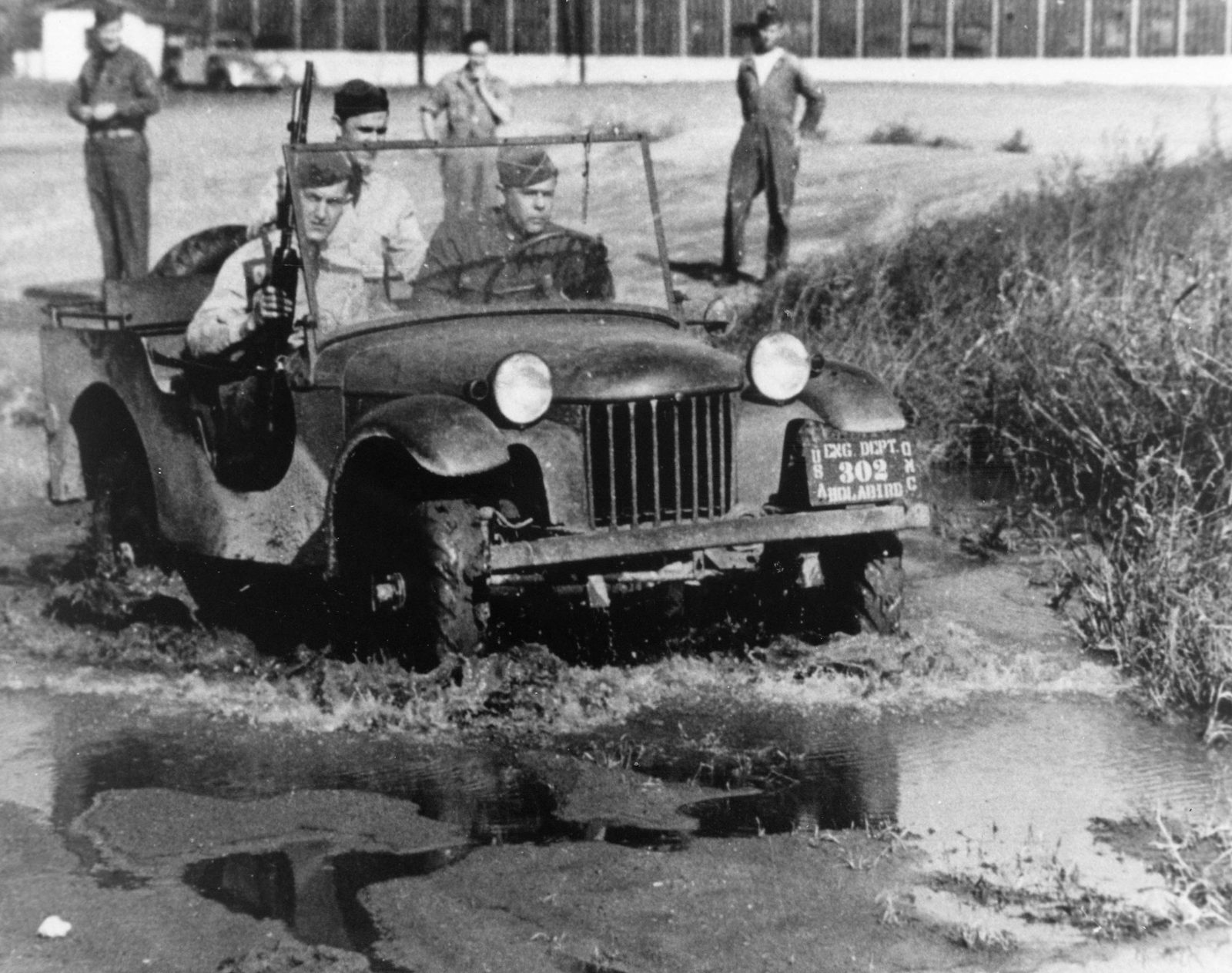
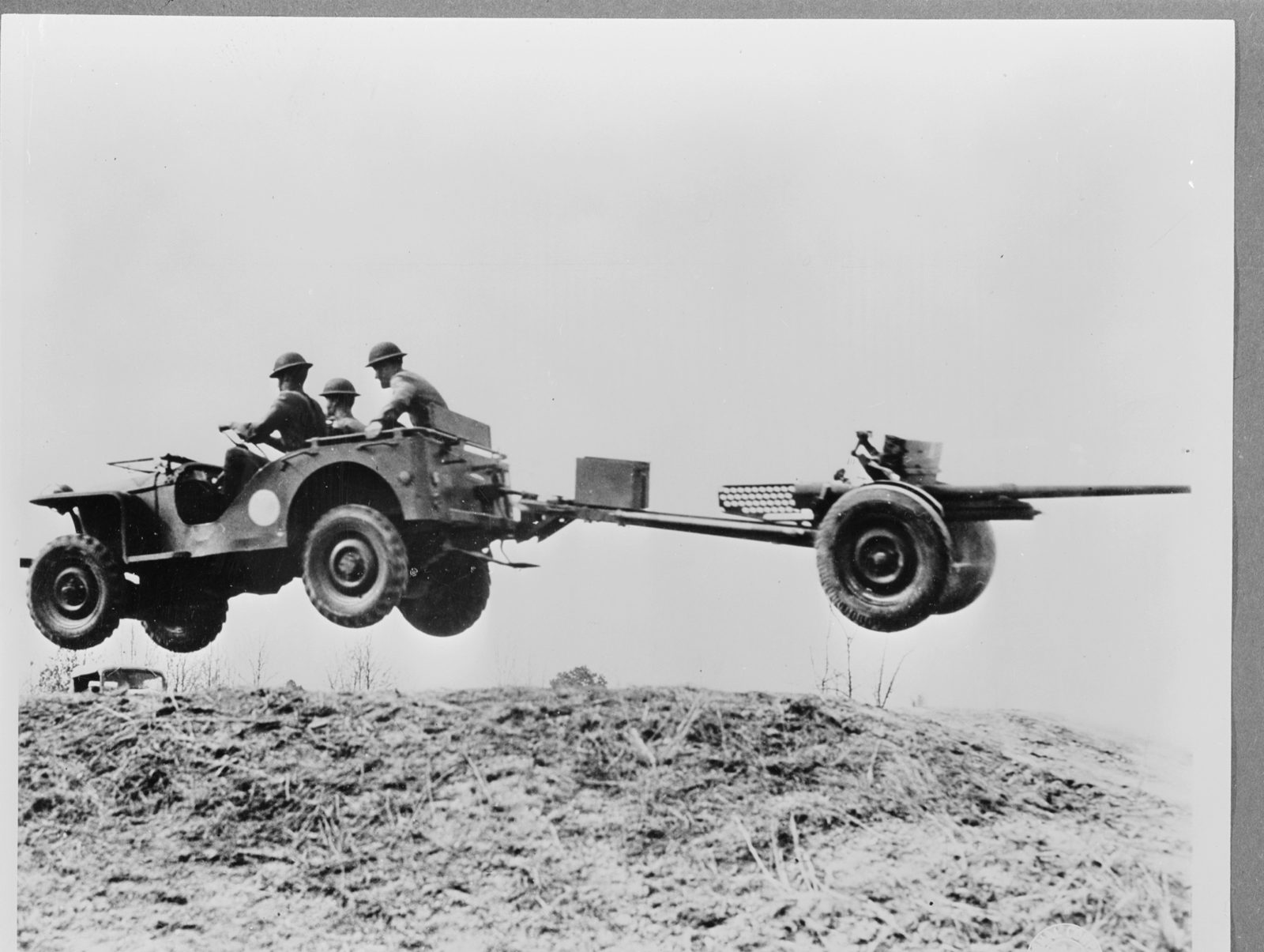
Bantam delivered the pilot to the Quartermaster depot at Camp Holabird, Maryland, on 23 September 1940. In tests and demonstrations that autumn it carried troops over rough ground and towed the new 37 mm anti-tank gun, and on 22 October Holabird's engineers recommended the type for service testing. Like every later version it weighed far more than the invitation's limit of about 1,300 pounds, which the Army's procurement officer later called "physically impossible"; the limit was raised to 2,160 pounds for all makers.
“It is our baby.”Frank Fenn, Bantam's president, to Senator Harry Truman, Senate hearings, 6 August 1941
October–November 1940
The Army shows Bantam's car to its competitors
The Quartermaster Corps doubted Bantam's finances and wanted at least two sources for any vehicle the Army would use in quantity. Its officers invited Willys and then Ford to build pilot models at their own expense, using the Army's specification and drawing, and both companies' representatives examined the Bantam at Holabird while it was being tested. An Infantry officer recorded that the Willys representative "examined the Bantam pilot model closely and made copious notes".
Bantam's president testified that he had seen Ford men under the car in a grease pit at Holabird, sketching its layout. Ralph Turner, one of the Bantam mechanics, recalled that Willys was given the Bantam's blueprints, and the former Chief of Infantry told the FTC in 1943 that Ford and Willys had "secured plans and specifications of the Bantam". No record of a formal hand-over has been found. Willys delivered its "Quad" pilot on 13 November 1940 and Ford its "Pygmy" on 23 November.
“I personally saw Ford Motor Co. representatives in under our car in a grease pit at Holabird with a clip board making freehand drawings of the lay-out.”Frank Fenn, Senate hearings, 6 August 1941
November 1940 – June 1941
1,500 from each maker
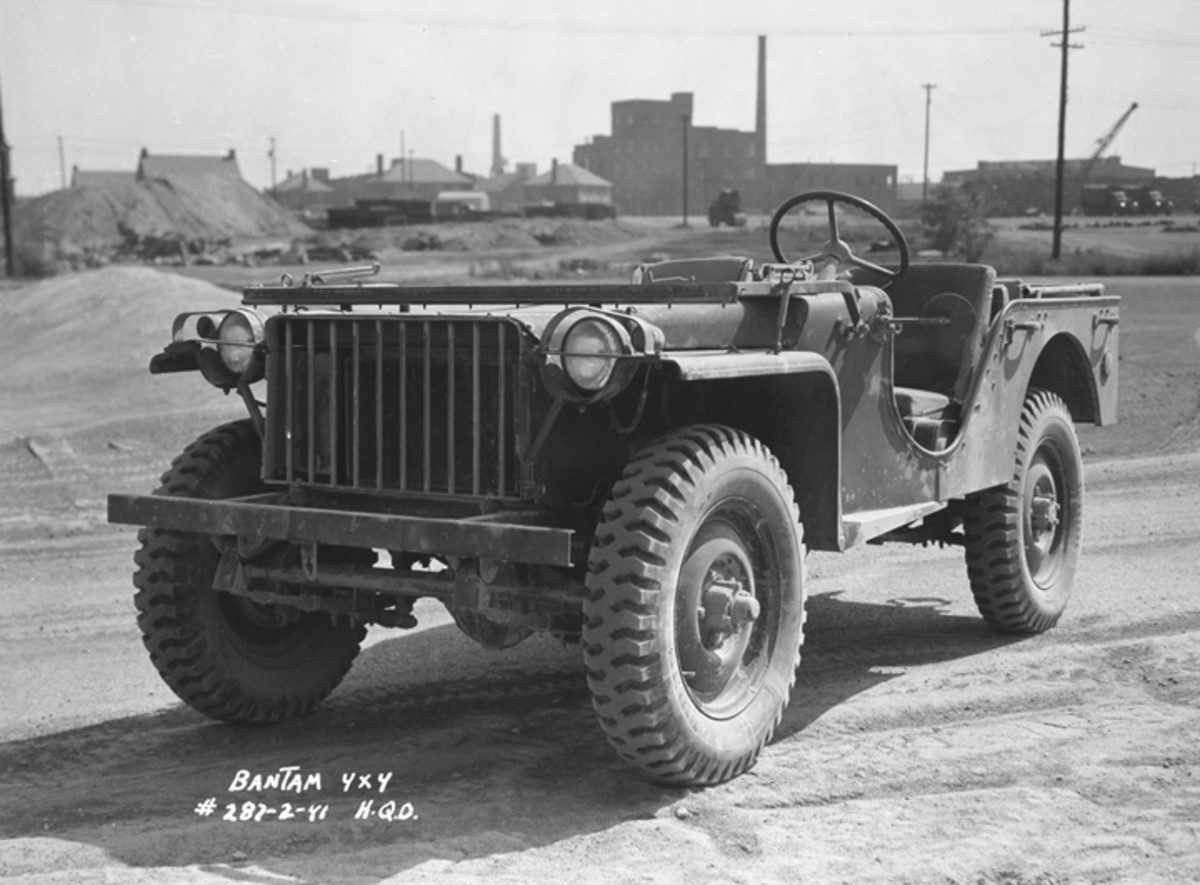
The Infantry wanted all of the next 1,500 cars from Bantam. The Quartermaster General objected that Bantam was "a small company with no productive facilities of any importance", and the War Department split the order: 1,500 each from Bantam (the BRC-40), Ford (the GP) and Willys (the MA).
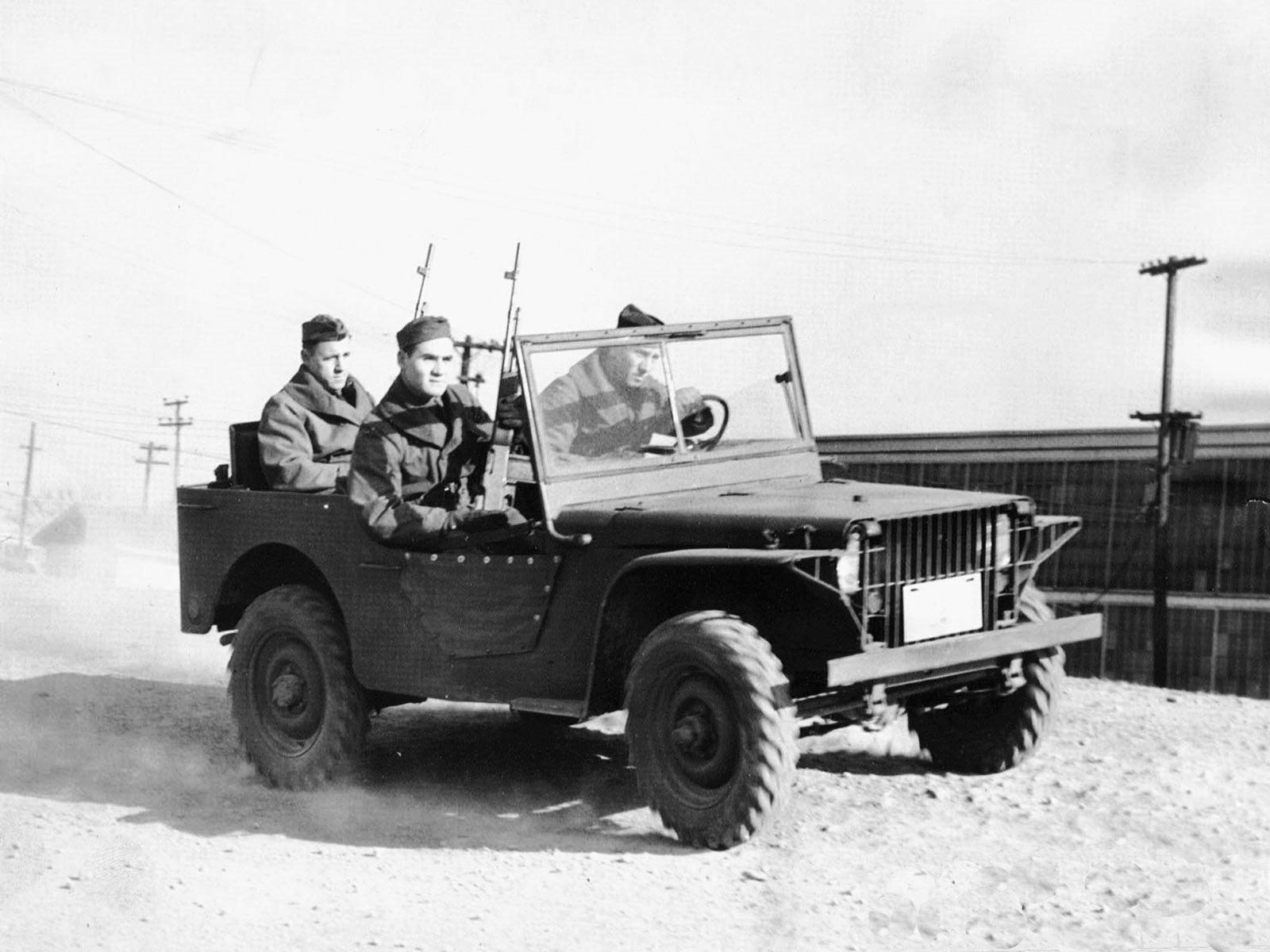
Bantam began shipping in March 1941 and completed its 1,500 in June, six days ahead of the extended date, then built a further 1,072. Some 150 were shipped abroad. In comparative tests that summer the Army found the Willys strongest for its engine, the Bantam for its fuel economy and braking, and the Ford for its controls and leg room.
July–October 1941
Standardized on Willys, built by Willys and Ford
In July 1941 the Army froze the design so that parts would interchange, and asked for bids on 16,000 vehicles, all to one maker. Bantam, Ford, Willys and Checker bid. Willys was lowest and won the contract on 1 August 1941. Its car, the MB, was developed from the MA and kept the Willys "Go Devil" engine, which the FTC later called Willys's outstanding contribution.
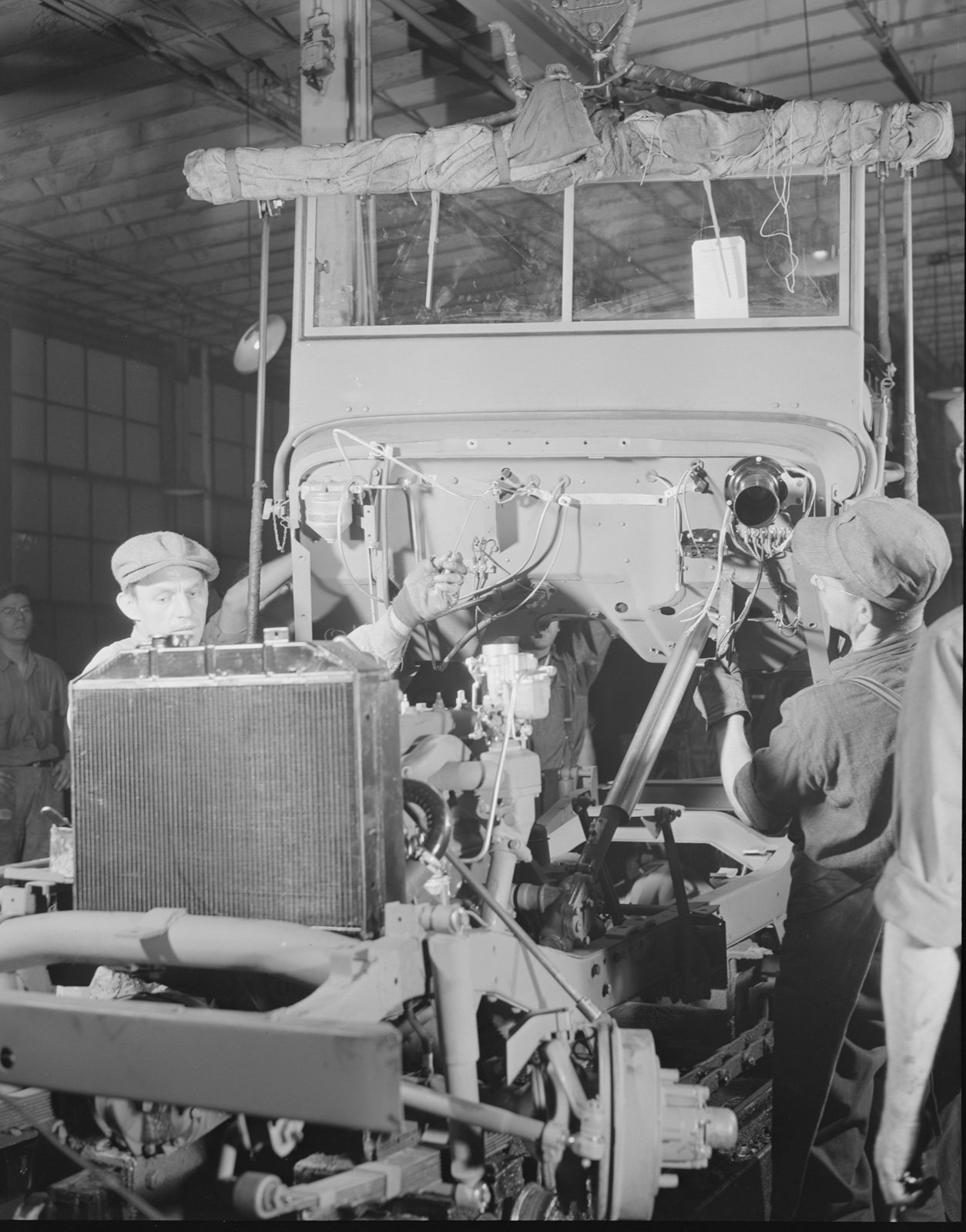
In October 1941 the Army brought Ford in as a second source, building the Willys design to Willys's drawings as the GPW. Willys built about 360,000 jeeps during the war and Ford about 278,000. Bantam built trailers instead, including 73,569 of the quarter-ton trailer that the jeep towed.
“Award of the contract to Ford excluded Bantam from the picture entirely and thus denied to the firm that had pioneered the vehicle any share in its wartime production.”Harry C. Thomson and Lida Mayo, The Ordnance Department: Procurement and Supply, U.S. Army in World War II (1960)
1943–1948
The Federal Trade Commission case
Willys advertised during the war that it had created the jeep. In 1943 the Federal Trade Commission charged that the claim was false, alleging that the jeep was originated and developed by Bantam with Army officers.
In its decision of 27 February 1948 the Commission credited the Army with originating the project and Bantam with the first pilot model, and ordered Willys to stop claiming that it had created or designed the jeep. Willys could still say it had helped develop and perfect it.
“Great credit is due the Army for originating the project and for its tireless efforts toward developing and perfecting the vehicle. Bantam contributed greatly by its assistance during the early stages of the project and by supplying the first pilot model. Willys-Overland made an outstanding contribution in its powerful engine, as well as in other features of the vehicle.”Federal Trade Commission, Docket 4959, findings, 27 February 1948
1942–1993
Bantam after the jeep
Bantam spent the rest of the war on trailers, torpedo parts and other contract work, and received the Army-Navy "E" award in December 1943. It went on building trailers until it was sold to the American Rolling Mill Company in 1956.
In 1993 Pennsylvania placed a state historical marker a block from the Bantam plant in Butler. Butler has held a Bantam Jeep Heritage Festival since 2011.
“Although larger companies ultimately received the chief wartime orders, it was Bantam—in cooperation with the Army—that originally created the jeep.”Pennsylvania Historical and Museum Commission marker, "Invention of the Jeep", Butler, 1993
1940–1941
The name
The Army's name was "Truck, ¼-ton, 4×4". Soldiers called it a "jeep" or a "peep" from late 1940. The Federal Trade Commission concluded that a soldier had probably taken the name from Eugene the Jeep in the Popeye comic strip; it reached the national press after a Willys demonstration in Washington in February 1941. The often-repeated story that it came from "G.P." for "general purpose" is unproven.
The pilot models and the first orders
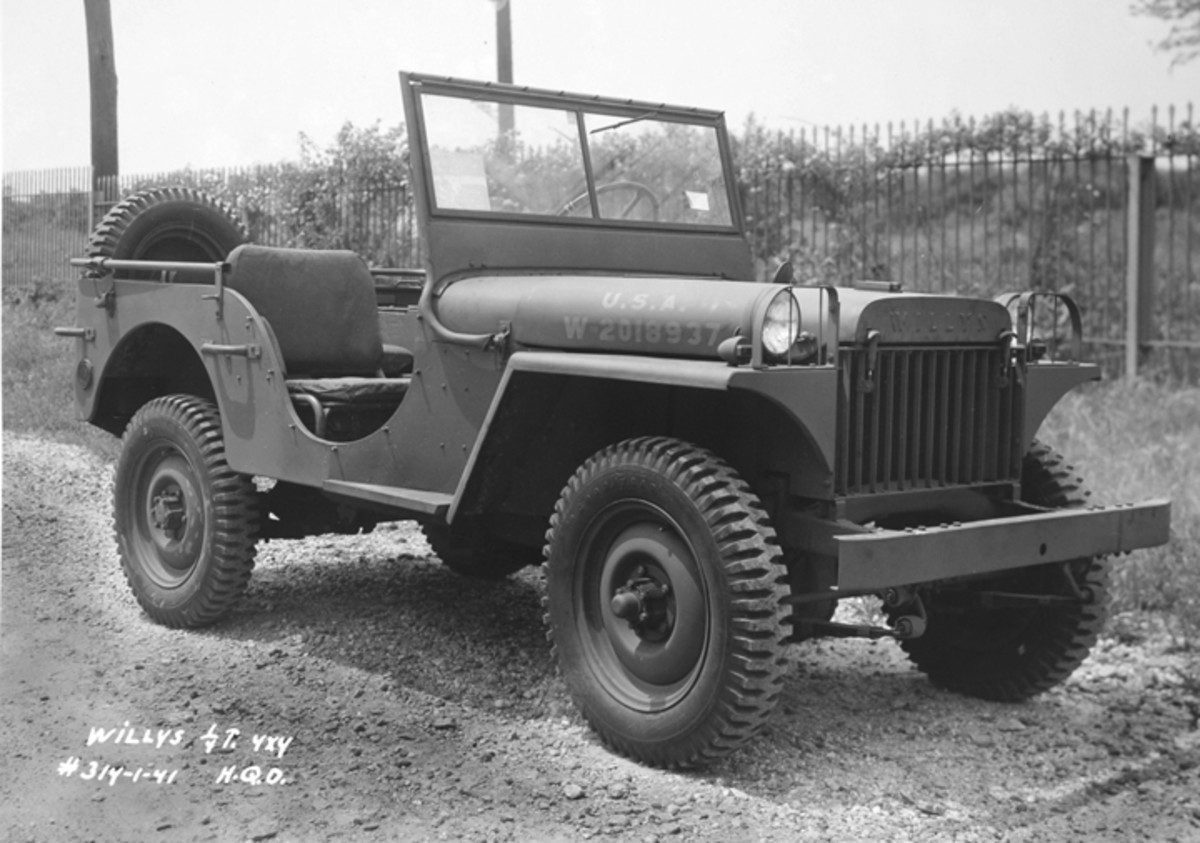
The FTC found that by October 1940, “based on the favorable tests of the Bantam the general characteristics of the vehicle had been formulated and the creative stages had been substantially completed.” The standardized design was Willys’s MB, which Ford also built as the GPW.
| Model | Maker | Date | Wheelbase | Engine | Built |
|---|---|---|---|---|---|
| Pilot model | Bantam | Sep 1940 | about 79 in | Continental, 112 cu in | 1 |
| BRC-60 (test lot) | Bantam | Nov–Dec 1940 | about 79 in | Continental, 112 cu in | 70, including the pilot |
| Quad | Willys-Overland | Nov 1940 | 80 in | Willys Go Devil, 134.2 cu in | 2 |
| Pygmy | Ford | Nov 1940 | 80 in | Ford tractor engine, 119.7 cu in | 2 |
| BRC-40 | Bantam | 1941 | 79 in | Continental, 112 cu in | 2,572 |
| MA | Willys-Overland | 1941 | 80 in | Willys Go Devil | about 1,550 |
| GP | Ford | 1941 | 80 in | Ford tractor engine | about 4,450 |
| MB (standard) | Willys-Overland | 1941–45 | 80 in | Willys Go Devil, 60 hp | about 360,000 |
| GPW (standard) | Ford | 1942–45 | 80 in | Willys Go Devil, built by Ford | about 278,000 |
Bantam’s total of 2,642 is the Army’s acceptance figure, which matches the FTC’s finding; the 1993 marker gives 2,675. Willys and Ford totals vary with how pilots, early models and late cancellations are counted.
Timeline
| 22 Mar 1933 | The Army buys an American Austin from Butler for tests at Fort Benning. |
|---|---|
| 1937 | Capt. Robert G. Howie's machine-gun carrier, built from Austin parts, is tested at Fort Benning. |
| Nov 1938 | The Cavalry Board finds the 1938 Bantam chassis unsuitable. |
| 6 Jun 1940 | The Chief of Infantry asks for a light four-wheel-drive vehicle. |
| 19–22 Jun 1940 | Army subcommittee at Bantam, Butler; its report sets the first characteristics. |
| 11 Jul 1940 | Invitation to bid for 70 cars sent to about 135 manufacturers. |
| 22–25 Jul 1940 | Bids from Bantam and Willys only; contract awarded to Bantam. |
| 23 Sep 1940 | Bantam delivers the pilot model to Camp Holabird. |
| Oct 1940 | Willys officials observe the Bantam tests at Holabird. |
| 13 and 23 Nov 1940 | Willys Quad and Ford Pygmy pilots delivered. |
| Nov 1940 | Orders for 1,500 each from Bantam, Ford and Willys. |
| 29 Nov–17 Dec 1940 | Bantam completes the 70-car test lot. |
| Feb–Jun 1941 | Ford GP, Bantam BRC-40 and Willys MA deliveries begin. |
| 1 Aug 1941 | Willys wins the 16,000-vehicle contract for the standardized jeep. |
| 4 Oct 1941 | Ford engaged to build the Willys design (the GPW). |
| 6 May 1943 | FTC complaint against Willys's advertising (Docket 4959). |
| 27 Feb 1948 | FTC decision: Willys may not claim it created or designed the jeep. |
| 1956 | American Bantam is sold to the American Rolling Mill Company (ARMCO). |
| 17 Oct 1993 | Pennsylvania's "Invention of the Jeep" marker dedicated in Butler. |
People
- Frank FennPresident, American Bantam
Led Bantam's dealings with the Army; his 1941 Senate testimony is the fullest contemporary Bantam account.
- Harold CristPlant manager and chief engineer, Bantam
Managed the project and directed the hand-building of the pilot.
- Karl ProbstConsulting engineer, Detroit
Drew Bantam's bid layout and worked at Butler through the pilot's construction. His share of the design is debated.
- Ralph Turner and Chester HempflingMechanics, Bantam
Built the pilot's chassis and engine installation, and its sheet metal.
- Charles H. PayneWashington representative, Bantam
Brought the project to the Office of the Chief of Infantry in 1940.
- Robert G. HowieCaptain, later Major, Infantry
Built the 1937 machine-gun carrier and attended the Butler meeting.
- William F. LeeLieutenant Colonel, Office of the Chief of Infantry
Signed the June 1940 report; credited by the Chief of Infantry with the military characteristics.
- Edmund B. GregoryMajor General, Quartermaster General
Argued that Bantam could not produce in quantity and pressed for Ford and Willys.
- Delmar G. RoosVice president for engineering, Willys-Overland
Developed the Go Devil engine that powered the standardized jeep.
Sources
- Federal Trade Commission. In the Matter of Willys-Overland Motors, Inc., et al., Docket 4959. Federal Trade Commission Decisions 44 (1950): 572–590. Link
- U.S. Senate, Special Committee Investigating the National Defense Program. Hearings, part 7 (August–September 1941): testimony of F. H. Fenn, E. S. Van Deusen and J. D. Biggers. Link
- Erna Risch. The Quartermaster Corps: Organization, Supply, and Services, vol. 1. U.S. Army in World War II, 1953, pp. 140–143. Link
- Harry C. Thomson and Lida Mayo. The Ordnance Department: Procurement and Supply. U.S. Army in World War II, 1960, pp. 276–279. Link
- Lt. E. P. Hogan. "The Story of the Quarter-Ton." Quartermaster Review 21, no. 2 (1941).
- Army correspondence of 1938–41 (Infantry, Ordnance and Quartermaster Corps), transcribed from the National Archives, the Army Heritage and Education Center and the Detroit Public Library by willys-overland.com. Link
- Pennsylvania Historical and Museum Commission. "Invention of the Jeep" marker, Butler, 1993. Link
- Smithsonian National Museum of American History. Bantam Jeep Prototype, 1940 (serial 1007). Link
- David D. Jackson. "American Bantam Car Company in World War Two" (Army acceptance figures). Link